Showing posts with label 1991. Show all posts

Monday, 8 May 2017

Ten SAW B-Sides I'd Have Made The A-Side! [Part 1]

As a Stock Aitken Waterman fan in the 1980s and early 1990s, one would become resigned to the fact that the B-side of many single releases would be an instrumental version of the A-side. As my love of all things SAW has deepened over the years, I’m now delighted to have so many instrumental versions that allow me to listen closely and pick out the different elements which make up the song.

As a teenager desperate for original SAW material, I was a bit frustrated by this reliance upon the instrumentals – but I guess this made the appearance of a brand new original SAW track on the B-side a VERY EXCITING EVENT!

Sure, some tracks would impress more than others, but every so often you’d get a SAW B-side which was just as good as the A-side, and in some cases, even better than the A-side.

So here is my – admittedly personal – list of the 10 SAW B-sides which I would have made the A-side!

The criteria for the list is:
  • Written (and/or co-written) by SAW
  • Standalone tracks not belonging to an original artist album
  • A full song with lyrics

The latter point means that tracks such as I Wanna Be Your Everything by Delage, Just Call Me Up by Jason Donovan, and Do You Dare? by Kylie Minogue are excluded. As are the instrumental pieces SAW created for the Pat & Mick B-sides (although a separate article on these will follow).

Likewise, instrumental and dub mixes of the A-side are also excluded.

Hopefully, you will find some of your favourites in this list, but I’m equally as certain that you may be aggrieved that I have missed some obvious choices out. Yes, I’ve left out certain Kylie and Jason tracks which I love, but I don’t want this to be a list full of their tracks.

So here goes, in reverse order!

10) I Wanna Shout About It – Delage
[B-side to Running Back For More]

This infectious slab of dance pop from early 1990s SAW girl band Delage appears to have had an interesting genesis. As lovely as the A-side Running Back For More is, this meaty, utterly contemporary banger is probably the more commercial cut of the two tracks, and it is a mystery why this was consigned to B-side status. That said, the recent re-issue of Running Back For More carries additional mixes of I Wanna Shout About It, including 7” and 12” mixes, which suggests that it was considered as an A-side. So we have two key versions: a full vocal single version, and the version that made the B-side of Running Back For More, which omits the verses. The full vocal version is just glorious, with a strong lead vocal and some great backing harmonies, but the official B-side version heads more in the direction of the limited vocal style of contemporaneous dance tracks. A big dirty synth riff and some frantic house piano kicks off proceedings, whilst the solid beat and shifting synth pads give this track a real edge which takes it away from the standard SAW sound of the time towards the tough dance sounds dominating the charts at the time.  A great marriage of pop sensibilities and house influences, this was a real missed opportunity for both the band and producers. One of the emerging themes from this top 10 list of B-sides is how S(A)W were able to demonstrate they were still more than capable of remaining current and up-to-date in the early 1990s, but maybe there was a lack of confidence somewhere in terms of being more adventurous in choices of single material.


9) Say The Word – I’ll Be There - Kylie Minogue
[B-Side to Word Is Out]

Whilst Word Is Out still appears to be a polarising song for S(A)W and Kylie fans, its B-side Say The Word – I’ll Be There garners a much warmer reception. Composed by Stock, Waterman and Minogue, this smooth, mature mid-tempo ballad is worlds away from the beat-led and brass-boasting affair on the A-side. Underpinned by rich, rolling piano and made all the sweeter by the glorious backing vocals, Say The Word sees Kylie in pining mode as she makes her case to the object of her affections. It’s a further development of the Kylie sound; however, where the listener can hear the S(A)W DNA deep within Word Is Out, one could be forgiven for thinking that Say The Word had been produced by a different production team. It’s lush, with a real organic feel to its arrangement and production, with little in the way of electronic sounding synths and percussion to betray the trademark sound of its producers. Certainly Mike Stock, in his recent interview with Nick Moon, cited this track as one of his favourite B-sides. Whilst it perhaps wouldn’t have been the best choice for the first single of Kylie’s fourth album campaign, it would have made for a good third or fourth single and perhaps indicated a new direction for S&W and Kylie had they continued to work together. I would add though that it is almost a crime that the track didn’t make the Let’s Get To It album.


8) Story of My Life - Jason Donovan
[B-side of Rhythm of the Rain]

B-sides often allowed SAW to try something a little different, and during their imperial pure pop phase of 1988-1990, such experimentation was very welcome. So it was that the B-side of Jason’s Rhythm of the Rain gave us Baggy Jason (baggy, of course, being the early 1990s term to describe what would later be called indie). Story of My Life is a standard Jason tale of bad luck in love (“And by the way, if you’re looking for sunshine, I ain’t the luckiest one / If you come with me, there’d be cloud in the desert / or a total eclipse of the sun”), but the arrangement and production presents a real change to the SAW sonic palette of the time. Kicking off with wailing guitars, Jason’s tale of woe is backed by a solid electric guitar riff, honky-tonk piano and a thumping beat, whilst the inclusion of brass and organ enlivens proceedings further. As Tom Parker points out in his excellent sleeve notes for the Between the Lines Deluxe reissue, this track finally gives Jason the Happy Mondays-style track he’d coveted for some time, and surely he must have been pleased with the outcome. That’s why I think it’s a crying shame this languished on a B-side; it’s a million times more adventurous than the pleasant cover version that made the A-side. This track would have really benefited Donovan’s profile – it’s poppy enough to keep the SAW and Jason fanbase, but also different enough to pull in a wider audience – and would have been a good direction for both parties to head for.


7) Another Lover – Bananarama
[B-side of Last Thing On My Mind]

Please Yourself, Bananarama’s 1993 album with Stock & Waterman, received mixed reactions upon its original release, and actually remains a polarising collection amongst S(A)W and Bananarama fans to this day. I can’t help but wonder if that reception would have been improved at all by the inclusion of this track, which was on the flipside of Last Thing On My Mind but omitted from the album. It’s a decision which beggars belief, as this is a superior slab of 70’s disco-styled pop. The use of real strings (no doubt recorded in the same sessions as those for Give It All Up For Love and Is She Good To You?) creates an authenticity of the sound, whilst the addition of brass, funky rhythm guitar and rattling drums just adds to the joyous feel – even if lyrically it’s a tale of Keren and Sara telling a straying lover to pack their bags and go. Happily, the track eventually made it to the album on subsequent reissues, thus righting the original wrong, but for my money, this should have been an A-side back in 1992/1993.


6) Better Than Ever - Sonia
[B-side to Listen To Your Heart]

This sparky uptempo track had a former life, planned as it was to be a fourth Stock Aitken Waterman-branded single in 1989, featuring sometime PWL singer Lisa Fabien as guest vocalist. That version was never released at that time (although was finally issued as part of the PWL iTunes releases many years later), but you can’t keep a good SAW tune down, so it was eventually recorded by Sonia – but insanely was consigned to B-side status. It only takes one listen to know this is a hit record not given the chance to be one. Driven by a solid beat and a mean bass, the track is a perfect concoction of synth fx, brass riffs and guitar licks, providing a thrilling backdrop to Sonia’s tale of her sickeningly perfect relationship. As much as I love the A-side – a moody, house-influenced affair and much underrated – I do think Better Than Ever was a missed opportunity for another hit for Sonia.


Next time: we count down from 5 to 1…

Monday, 3 April 2017

If Only We Had Worked It Out Somehow…


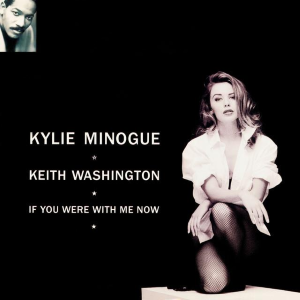
The melancholic majesty of Kylie's If You Were With Me Now

Ask the general public about Stock Aitken Waterman and they will tell you that they made catchy, happy three minute pop records. Which, in fairness, is palpably true.

But Mike, Matt and Pete were equally adept at balladry too. Witness the beautiful pain on display in Rick Astley’s Spanish-guitar-led It Would Take a Strong Strong Man, as Rick agonises over whether he should end his relationship. Likewise, Kylie tugs at the listener’s heart-strings as she puts a brave face on losing the love of her life in the desperately sad I’ll Still Be Loving You. And don’t get me started on the heartbreaking tale of two people who can’t be together in Donna Summer’s In Another Place and Time.

There’s more where they came from too. Lonnie Gordon’s Beyond Your Wildest Dreams, Sybil’s Make It Easy On Me and Jason Donovan’s I Guess She Never Loved Me are among the numerous ballads that the trio helmed.

What I especially like about most of the SAW ballads is that they are not slushy American-styled affairs; they are a very British take on the slow love song, whether that is down to a spikier production or a melancholic approach to the lyrics. Certainly, I’ll Still Be Loving You is actually mid-tempo, with possibly the saddest (in the truest sense of the word) synth sounds ever ramming home the emotional melody.

But we did finally get a slushy American-style ballad from the Hit Factory in 1991, when Mike Stock & Pete Waterman crafted If You Were With Me Now for Kylie Minogue and Keith Washington.

The track was recorded for Kylie’s fourth and final PWL studio album, Let’s Get To It. The album was among the first original Stock & Waterman material issued following Matt Aitken’s departure, and it could be taken very much as a statement of intent from Mike Stock. The album was a real departure in sound and songwriting for Stock, as much as it was an assertion of Kylie taking real control of her career.

The album showcased different genres, from New Jack Swing to acoustic guitar pop to techno, with possibly only the cover of Chairman of the Board’s Give Me A Little More Time the only track that sounded anything like a “typical” SAW production.

But one of the album’s crowning glories is If You Were With Me Now, a moving duet about two former lovers ruminating over their failed relationship and reaching the conclusion they’ve made a big mistake.


As the male voice, US singer Washington was not a well-known figure in the UK, but had established himself in the soul & R&B fraternity with releases such as 1991’s Kissing You. Minogue was a big fan of Washington, and as legend would have it, Pete Waterman approached Washington to duet with Minogue on this track.

The track is credited as a Stock / Waterman / Minogue / Washington co-write, although it is fair to suggest that the majority of input was Stock’s. Washington did travel to London to record his vocals at PWL, so perhaps he contributed additional lyrics at this point. He and Minogue, as is generally the case with modern day duets, did not record the track at the same time, with Minogue recording her vocals a few days later.

Lyrically, the song is a song of lost love, with a real melancholic edge to it. “Without you standing by my side,” opines Washington in the opening lines, “love and good fortune passes me by”. Quite a powerful line, and things don’t get much brighter from there on in.

The track hints at the male having cheated on the female; Washington sings “I know I may go astray…” whilst Minogue stresses that “If I’m sure of one thing / One love at a time”.

There’s plenty of wistful longing; “How different would the world be now?” offers Washington, whilst Minogue adds the plaintive “If only we had worked it out somehow”.

One possible reading of the song is that the closing lines hint at a possible reconciliation: “If loving you is right / then turn back the hands of time” begs Minogue, whilst Washington counters with “I'll do anything to make you mine”, and then both adding “There's nothing that i wouldn't do / I could make you feel my love for you” as the melody takes a hopeful turn.

Minogue sings her heart out here and has probably never sounded better, whilst Washington also impresses with a powerful yet smooth performance.

Stock provides a typically fine melody, big on emotion whilst holding back on sentimentality. The verses are measured and thoughtful, with the chorus (such as it is) restricted to three lines, with the title of the song as the final line.

The arrangement and production is gorgeous. Waterman arranged for the string section to be arranged by legendary Motown arranger Paul Riser in New York. This creates a rich, lush sound to this epic ballad, and Stock’s own instrumentation is in fitting, featuring a doleful piano and neat percussion.

Phil Harding was responsible for the immaculate mixes, and makes the song shine.

As I indicated before, I’m not really a fan of the American-style slushy ballad, but full marks to Stock & Waterman for their take on that sound. They take that late-night soul sound, and bring their own British melancholy to it.

If You Were With Me Now became the second single single taken from Let’s Get To It, released in October 1991 on 7”, 12”, cassingle and CD single. Apparently, one of the reasons it became a single is that DJ Pat Sharp (of SAW act Pat & Mick) loved the track and played it on his Capital Radio show – the response from listeners made it a contender for single release.

At the time, I was slightly disappointed; although I liked the track, I was hoping that a more radical track like Let’s Get To It, Right Here Right Now or Too Much Of A Good Thing would be issued – a track that would show a new modernity to the Hit Factory sound. But looking back, it was a good single choice, reaching #4 in the UK Singles Chart.

I’ll be honest; it’s only fairly recently that I have fully realised how great this track is. I’ve been listening to it a lot over the past few days, and aside from it being yet another example of S(A)W’s diversity, it’s such a sincere piece of music – although I accept it may be too sweet for some tastes. Maybe it’s an age thing, maybe it’s cos I’ve been through a tough few years relationship-wise, but I think it’s so powerful in its simplicity. If you ask me today, then I’d probably say it’s the best S(A)W track ever. I’ll probably give you a different answer tomorrow, but go with it for today and give it a play below.


References:

Mike Stock, "25 years ago today...", Facebook post, 21 October 2016

Sunday, 26 March 2017

KCM Hotshot #3: Running Back For More – Delage

A look back at the underrated second single from 1990s SAW girlband Delage…

As discussed previously on this blog, Stock Aitken Waterman entered the 1990s in search of a new sound; a quest which became more important as their signature sound became less prevalent in the marketplace. This would result in a period of experimentation akin to that of 1985-1986, yielding some real undiscovered gems. One of these gems was Running Back For More, a 1991 house-inspired track from four piece girl band Delage.

A new band put together by PWL and named after one of Pete Waterman’s favourite classic cars, Delage were originally called Dazzle (and indeed, the promos of their debut single carried this name). The band originally comprised Rhonda, Karena, Charlotte and Judy, and were first referenced in a fascinating Smash Hits article entitled “Are Stock Aitken Waterman Down The Dumper?”. The Dumper, as Smash Hits put it, was the place that unsuccessful acts and records would end up after failing to achieve chart success, and 1990 had indeed seen a decline in the amazing success SAW had enjoyed in 1989. This article, built around an interview with Mike, Matt and Pete, enabled the trio to answer back to the critics who had written them off, and as part of that, they outlined some of their future plans. Boy Krazy were referenced (albeit as Boy Crazy), as were Delage; both as new acts to relaunch SAW in the 1990s.

Delage’s debut single would emerge a few months later, just ahead of Christmas, released via the PWL/Polydor joint venture which had been set up on the back of the Band Aid II single. The Boy Krazy singles were also issued as part of this arrangement, as were the two Grease-related megamixes put together by Phil Harding and Ian Curnow.


This debut release – a cover of the Hues Corporation’s 1974 hit Rock The Boat – was produced by SAW, and issued with a computer-generated cover of a boat, rather than a photograph of the band members. It’s a robust SAW production and a faithful cover, carried along by some energetic brass and strings, plus the inclusion of more modern elements such as a “1-2-3-4” sample, and a sax riff which tipped its hat to Chad Jackson’s Hear The Drummer Get Wicked.

This release reached #63 in the UK Singles Chart, which whilst unspectacular, wasn’t too bad for a single with limited exposure in the run up to Christmas. However, it would be nearly a whole year before a follow-up appeared.


The classy and understated SAW-composed and produced Running Back for More was issued in October 1991, by which time there had been a change in line-up between singles, with former members Charlotte and Judy replaced by Emma and Frances.

Certainly you can tell the difference in the vocals between Rock The Boat and Running Back For More; however, to my ears at least, the vocals on Rock The Boat sound very much like SAW stalwarts Mae McKenna and Miriam Stockley (who were indeed credited for backing vocals on the sleeve), whilst Running Back For More adds Cool Notes’ lead singer Lorraine McIntosh for backing vocals, therefore it is difficult to get a real sense of what Delage really sounded like. That’s not to suggest they did not sing on these tracks, just that I wonder if the vocals of McKenna & Stockley, and McIntosh were very prominent in the mix.

Running Back For More features one of Mike Stock’s most impressive lyrics; a story of a woman chastising her friend for remaining in an unsuitable relationship, Stock makes very word count and tells the story with maximum emotional effect. “You ain’t learned nothing at all / And you still ain’t closing the door / On the boy who tears you apart / Telling you every lie you know by heart” is the first verse, and that final line carries so much truth in its effective simplicity. The melody of the verses is wonderfully fluid, and adds even more to the delivery of the lyrics.

The track gives us yet more lyrical gold with “So don’t you come to me for advice / If the truth hurts more than his lies”; a line which may not mean much on paper, but is dynamite within the track itself.

The chorus is perhaps more sedate than most SAW choruses, but it totally works within the song. This is the apex of the song’s message: “Running Back For More / Like a fool / I don’t think you know what you’re doing / He’s gonna break your heart, that’s for sure / You’re running back for more / Running back for more”. It’s an understated chorus, but is clearly influenced by the US house style of that time.

More than any other SAW composition, the entire melody seems very organic with the chorus growing effortlessly from the building of the verses and bridge. There are no key changes, or dramatic shift in instrumentation, so there isn’t the usual lift into the chorus. This is no bad things though; this change of approach results in a cool, minimalistic house-influenced track.

Production-wise, there’s a change of emphasis in the sound. The arrangement is relatively sparse, driven mainly by a house piano and punctuated by techno bleeps, although there is effective use of strings at key moments. At the time of release, I wished that the track had a more typically dense SAW arrangement, but I’ve come to appreciate the delicacy of its instrumentation and its attempt to try something different.

The single was released on 7”, 12” and CD single formats, with the main track restricted to a 7” mix and an extended mix, both mixed by Dave Ford. (An unreleased 12” Remix of Running Back For More would emerge when a Running Back For More single bundle was issued on iTunes). The B-side was a further SAW composition and production, I Wanna Shout About It – a powerful, contemporary dance track. Ironically, this was possibly a more obvious candidate for the A-side than Running Back For More, as it was more in line with other chart fare at the time.

As I’ve written previously on this blog, SAW were experiencing mixed fortunes chartwise in 1991, and Running Back for More was a particular casualty. In fact, its #153 chart placing ranks it amongst the worst performing SAW singles – a great shame, as it is a much stronger track than this position suggests.

I can only speak for myself but it was difficult to actually find a copy of the record; even in a city the size of Liverpool, I only managed to find the CD single and 7” in the new releases rack of a second-hand record shop the week after release. That said, the PWL/Polydor releases seemed to suffer from distribution problems (aside from Band Aid II of course), and certainly this is reflected in the scarcity of the Running Back For More CD single, which now commands high fees on the record collecting market.

In some ways, the record’s availability is almost irrelevant when you consider its TV, radio and press coverage was virtually non-existent. I don’t recall any major radio play, or seeing the video on TV. And perhaps the main press coverage I do recall was in Number One magazine, when Sonia carried out that week’s single reviews. Coming not long after her split with SAW and PWL, Sonia rather predictably gave a negative review, dismissing the track as “yesterday’s beats” – highly ironic given that Sonia’s recent singles included the 60s-styled Only Fools (Never Fall In Love) and Be Young Be Foolish Be Happy!

Given the commercial failure of the single, there would be no further releases from Delage. There was however a further unreleased track, a SAW-produced version of the Bananarama track Ain’t No Cure. This latter track in particular was a missed opportunity for Delage and SAW; Ain’t No Cure had been recorded by Bananarama during the abortive 1989 sessions with SAW, and, on the basis that it was unlikely that the Bananarama version would be issued, it was called into use for Delage. The Delage version is a beefier, full-on hi-NRG assault with house overtones, and most notably employs a different emphasis on the verses (which is perhaps why Sara Dallin’s co-write credit is absent from the Delage version). This will be sacrilege to most Bananarama and SAW fans, but I much prefer the Delage version and genuinely think it would have had a great shot at chart success. However, Bananarama elected to include their version on Pop Life, which I assume removed it as an option for a Delage single.

Whilst Delage themselves parted ways with SAW and the PWL/Polydor deal, they did continue under the new name of Eden, and released two European singles in 1992.

Running Back For More -- as is the case with Rock The Boat and also Ain’t No Cure -- is available as single bundles on iTunes, including various mixes, instrumentals, backing tracks and B-sides.

Delage were cited as one of the bright new hopes for SAW in the early 1990s, but for various reasons they were not given the full support required to make this happen. However, Running Back For More remains an underrated track which represents an experiment in a new sound for SAW, and boasts an impressive lyric and melody. Well worth a listen.