Former Miss America and singer Suzette Charles burst on to the UK pop scene back in 1993 with a ton of potential, only for a series of events outside her control conspiring to thwart her burgeoning singing career.
But 30 years later, she's back. And she's back with the best pop album of the year!
Back in 1992, Suzette was signed to RCA America, and, unhappy with the material she was being offered by her stateside label, travelled to the UK to work with songwriters & producers Mike Stock & Pete Waterman, the remaining two-thirds of Stock Aitken Waterman (Matt Aitken having departed by this point).
However, RCA America was unhappy that Suzette had arranged this under her own steam without their agreement, which strained their relationship. One of the 6 tracks recorded with Stock & Waterman - Free to Love Again - was however released by RCA UK, just as Stock & Waterman’s own working relationship was imploding.
Free to Love Again missed the Top 40, Stock & Waterman went their separate ways, and Suzette found herself without a label and a production team.
Marriage and family life took Suzette away from her musical ambitions, but she always thought about the unfinished business of her music career.
Which brings us to the present day, with Suzette’s debut album finally released at the end of May 2026.
With Mike Stock again at the helm, this collection of faithfully re-recorded versions of the original 6 tracks and 5 brand new tracks shows that some things are really worth the wait.
Towards the end of the Stock & Waterman years, they had gone back to their soul roots, echoing their earlier work with the likes of Princess & the Three Degrees - and that modernised soul/garage/new jack swing take was the style they went with for those initial tracks with Suzette. The new recordings of these 6 original tracks are faithful enough for the fans who have heard the leaked versions over the years, but are modernised enough for 2026 ears. Pleasingly, the new tracks fit in seamlessly, melodically and arrangement-wise, showing that Mike Stock still knows his way around a good song. Also worth mentioning that mixing duties are provided by former PWL Mixmasters Pete Hammond and Dave Ford, both of whom contribute to the sheen of this album.
Free to Love Again opens the album, and the faithful pop-house arrangement only serves to remind me that this should have been a hit back in the day. Whenever You’re Around is soulful, grown up and taps into the Japanese City Pop genre; this one took me a couple of listens, but once it gets in your head, it doesn't let go. The ultra-catchy Don’t Stop (All The Love You Can Give) leans more towards pop than soul, but some funky house piano keeps the balance. See Your Smile has a Philly sound to it, and a great call and answer verse between Suzette & the backing vocalists. Nothing to Hide is probably the tour de force track on the album, with its straight down the line pop chorus, with chunky beats and great guitar work. We Lost The Beat is the most impressive track; a mix of Chic, Donna Summer and Mel & Kim, it’s a bit off the wall but a terrific blast of disco. What the Eye Don’t See is a real 90’s dance throwback, with an incessant bassline and punctuated by a bit of Hammond organ. After You’re Gone is a midtempo track with a spiritual lyric & great harmonies. Just For A Minute is a slab of classy soul-pop, with a killer chorus. Simple Life is a perky upbeat track with a hypnotic chorus. And wrapping the album up is killer ballad Every Time We Touch, which Suzette really delivers on.
As a long time Stock Aitken Waterman fan, this is the album I always wanted but never thought I’d get. For me, it’s an absolute belter of an album. Mike Stock, along with his son James and their team, has genuinely delivered a high quality pop album that is looping in my head even when I am not listening to it (and I am currently listening to it a lot). For me, Nothing to Hide is the standout track, followed closely by We Lost The Beat, but See Your Smile is the dark horse of the album I think; its chorus is already etched into my brain.
So, if you’re a SAW fan, you should definitely check this out. And if you aren’t, it’s still worth checking out as you may be pleasantly surprised. You can find it on streaming, download, as well as vinyl and CD (with an additional deluxe edition on the latter format, also carrying 6 remixes by former PWL Mixmaster Pete Hammond).
Until last Wednesday night, I'd had two close-but-not-quite encounters with Pete Waterman. The first was in 1989 when my friend and I attended a Radio City Hitman Roadshow hosted by Pete on the Royal Iris Mersey Ferry; a heady mix of Pete, headline act Sonia, and a couple of hundred kids - travelling up and down the River Mersey for two hours. My friend and I wanted to go up and speak to Pete, but we were a bit nervous and didn't quite know what to say -- so after about 90 minutes, we picked up the courage to go over, and my friend asked him when the next Hitman Roadshow was. Of all the things we could have asked (and, as a SAW fan of a few years standing by that point, I had a good few questions), he asked the most pointless question ever. At least he asked, I was too shy to speak! Indeed, our disappointment at blowing the opportunity was only tempered by our amusement when, during Sonia's performance below deck, the ferry lurched in choppy waters and the audience inadvertently rushed forwards -- leading Sonia's Pat-Sharp-lookalike bodyguard (thinking his charge was about to be mobbed) to leap in and protect the singing starlet with a dramatic sweep of his arm.
My second near-miss took place a good 20 or so years later, when I found myself in London's Euston Station waiting for a train to take me home to Liverpool after a day at a very dull conference. I was leaning against the side of the Tie Rack shop when I did a double-take as I saw Pete Waterman, striding purposefully past, carrying two big laundry bags, off to catch a train. I had that split second of "should I go up and say hello?", conjuring up names like Michael Prince and Jeb Million to drop into said quick hello so he knew I was a Real Fan. But then I realised how uncool that would be, and how Pete deserved his privacy like anyone else, and also how a load of Londoners -- used to seeing famous people -- would roll their eyes as I broke the unspoken etiquette of the capital city.
So, as I sat in The Brindley in Runcorn on Wednesday night as part of the audience for An Evening with Pete Waterman - The Hit Maker, I hoped it would be third time lucky.
Pete has been touring venues across the UK in his one-man-show, talking about his life with the main focus on his career in the record industry, and so he took to the stage in Runcorn in Cheshire for the latest instalment in his tour -- calling it a home gig as he lives "just round the corner". The intimate venue of The Brindley was actually a real benefit to proceedings as there was a real sense of familiarity between performer and audience, which also put Pete at ease.
The first half of the show focused on Pete's life and career up to the late 1970s; he told us that he was thought to have died shortly after birth but was brought back to life by a neighbour with a spoonful of brandy and a "whack on the arse"! He showed that his entrepreneurial spirit started early when he "managed" a church choir, earning a pretty penny from arranging performances at funerals, and even picking the hymns! He took us through his early days as a DJ, and talked about how he encountered The Beatles when they played at the Matrix Ballroom in Coventry (where he DJ'd at) -- he said this was the pivotal moment of his life; the moment he knew that he wanted a career in music. He outlined how he picked up Hurts So Good by Susan Cadogan, and issued it on his own label before it was picked up by a major, giving him his first hit. He rounded off the first half with an hilarious story about how John Travolta, by way of thanks for Pete's work on A&R'ing the Grease soundtrack, ordered Pete to buy a car and he'd pick up the bill -- Pete's choice was not to Travolta's liking...!
The second half took Pete through the 1980s; time constraints meant that the early 80s work with Peter Collins for Musical Youth, Tracey Ullman and Nik Kershaw was skated over, but Pete did this so he could cover the Stock Aitken Waterman years in more detail. He referred to Mike Stock and Matt Aitken as "geniuses", which was nice to hear given there have been some disagreements between the parties over the years, and talked about how amazing it was to work with Paul McCartney on the Hillsborough record, all those years after meeting him at the Matrix Ballroom in 1962.
The final part of the show saw Pete open up the stage for a Q&A. Some interesting details emerged here: apparently the Reynolds Girls are now landladies in Ireland; Rick Astley was actually the drummer of the band (FBI) he was in before Pete signed him, and was actually standing in for the lead singer the night Pete went to see the band; Karl Twigg and Mark Topham were determined to produce Steps' 5-6-7-8 in such a way so that Pete wouldn't like it and would drop the whole idea -- and were devastated when he in fact loved it!
He also discussed something I hadn't heard before; many readers have heard Pete discuss that the Bananarama album Please Yourself had originally been designed as an Abba tribute called Abba Banana, but Pete explained that, at one stage, there was a plan for Stock & Waterman to do 6 tracks... with the other 6 tracks to be written & produced by Benny Andersson and Bjorn Ulveaus!
I got a question in, asking Pete which of the lesser-successful SAW singles in his opinion was "the one that got away"; he seemed stumped initially then commented he'd never been asked that question before! He thought about it some more then said there wasn't one; by which I took to mean that "if it wasn't a hit, it wasn't meant to be a hit".
I felt this Q&A section was possibly the best part of the show; not that there was anything wrong with the earlier sections, more that there was a real sense of community in the room and the show became a conversation. There seemed to be a real warmth towards Pete from the audience, and vice versa -- so it was a shame when Pete said time was up -- I genuinely could have listened to him all night. He's such a good storyteller, but the problem is he has more stories than Hans Christian Anderson - two and a half hours ain't enough!
The winners of the Twitter competition (with the new PWL enamel pin badges as prizes) were announced at this point; Pete jumped off the stage to present the badges (pretty agile for 71 years old -- we all applauded) and I was first up! So I got my badge, shook Pete's hand and said thanks -- already an improvement on the previous two near-misses. But I wasn't done yet.
So, once out of the auditorium, I waited patiently as Pete had his photo taken with other audience members -- then I took my chance. No need to mention Michael Prince or Jeb Million this time, I just introduced myself, said how much of a fan I was and mentioned this blog. Just a quick chat as there were other people waiting... and to be honest I was worried that if I outstayed my welcome, then Sonia's Pat-Sharp-lookalike bodyguard might leap in and protect Pete with a dramatic sweep of his arm.
But I felt I'd had a proper meeting this time, and all was well with the world as I drove home across the brand spanking new Mersey Gateway bridge. Well worth going out on a school night for, and I'd urge any of you to go along if Pete brings the show to a theatre near you.
++++++
Just a quick message to readers to say that the blog has been on enforced hiatus due to my hectic work schedule and personal commitments over the past few months -- but things are starting to clear and new articles are on the way! Thanks for your patience :-)
So -- after an unplanned hiatus! -- here is the second part of my list of the 10 SAW B-sides which I would have made the A-side!
In case you missed part one, the criteria for the list is:
• Written (and/or co-written) by SAW
• Standalone tracks not belonging to an original artist album
• A full song with lyrics
So, without further ado, here's my Top 5!
5) Closer – Kylie Minogue
[B-side to Finer Feelings]
As Kylie Minogue approached the end of her tenure with PWL Records, she clearly had a growing influence on her material. Certainly, the whole Let’s Get To It album demonstrated this, even if the singles chosen to promote the album did not necessarily reflect this change in style. This new direction was probably more keenly felt in the B-sides of those singles; Say The Word – I’ll Be There (previously covered in part one of this article), the house-techno pastiche I Guess I Like It Like That, the storming Do You Dare?, and this track, the B-side to adult ballad Finer Feelings. Kicking off with a hypnotic metallic synth and heavy breathing, Closer sets out its stall from the outset – a spooky and sensual deep house track that takes Kylie and Stock & Waterman into new territory. The robust house beat and the vocal locs show a more mature, less tricksy approach to Stock’s arrangement than previously demonstrated, with an amazing squelching synth workout in the middle. Minogue’s vocals appear to have a filter applied in places, which adds to the trippy sense to proceedings. But Stock (with Waterman and Minogue on co-writing duties) also takes an alternative approach with the song’s construction; it only has two verses (as opposed to the usual three), with the chorus tacked on to the end of each – with quite a gap between both of those verses. There is also no bridge as such (a key part of many SAW tracks). The lyrics have a pleasingly elliptical style to them, hinting towards the pleasure of sexual union (which actually complements the lyrics of the A-side), and these are of course reinforced by the heavy breathing which punctuates the track. Overall, it’s a refreshingly adult track in term of theme and sound; whilst there would be a year and two further PWL single releases before Minogue released the post-PWL Confide In Me, Closer actually indicates the mature stylised direction Minogue would take with her initial DeConstruction material. As much as I love and admire Finer Feelings, Closer was actually an utterly contemporary track that would have set a new course for both Minogue and Stock & Waterman – and arguably, the producers would have benefited more from such a re-evaluation at that time.
4) Never Knew Love Like This Before – Nancy Davis
[B-side to Higher And Higher]
Pizza-waitress turned karaoke-contest-winner turned pop-star Nancy Davis was a real missed opportunity for Stock & Waterman and PWL; her strong soulful voice and striking looks made her a real candidate for a new star for the 90s, and her debut track If You Belonged To Me was a strong classy house/pop crossover. However, when this track missed the top 40, her follow-up (and sadly, final release) took safer ground with a cover of Jackie Wilson’s Higher and Higher; whilst a joyful take on that classic, it took Davis away from the credible house/soul path and towards pure pop. The B-side was more interesting; again, more pop than house, but Never Knew Love Like This Before at least went some way into creating a new style that could be Davis’ own. The arrangement is a strange brew of both the 80s and 90s S(A)W sound; the house piano and brass base the track in 1992, whilst the vocal locs and incidental chime sounds hark back to the producer’s golden period. The elasticity of Stock’s melody allows Davis’ voice to shine, with her tackling the almost conversational lyrics, which present Davis telling the world how happy her new relationship has made her. One striking element of this track is that Mike Stock is on solo backing vocals here, and you can hear his isolated vocals just after the instrumental break. As with Say The Word – I’ll Be There, Stock cites this as another favourite B side, classing it as a bit of an experiment. And I guess that’s a good description. It sounds like Stock trying to forge a new pop sound for the 90s; if anything, he was a bit early – whilst this sound would have played better later in the decade, it didn’t really fit with the chart fare of 1992. As such, I’m not sure Never Knew Love Like This Before would have been a hit at that time, but, as per the challenge I set myself with this article, I’d have chosen this as the A-side over Higher And Higher.
3) Made In Heaven – Kylie Minogue
[B-side to Je Ne Sais Pas Pourquoi]
You might say this is a slight cheat, as Made In Heaven was originally intended as a double A-side single with Je Ne Sais Pas Pourquoi. This French-styled classic track was the fourth single from the massive Kylie album, so there many have been concerns over its chart performance given that so many people already owned it on the album and that is why new track Made In Heaven was appended to the release. As it was, Je Ne Sais Pas Pourquoi was another smash hit, peaking at #2 in the UK Singles Chart – and as a result, the single was never “flipped” to make Made In Heaven the A-side. A great pity, cos this one’s a little gem that deserves to be better known. Heavy on plucked strings and luscious synth pads, this tale of a girl building up to a first kiss is brought alive by an irresistible melody. The verses and bridge are exquisite enough, but that chorus just knocks it out of the park. It just shows the confidence and the winning streak of SAW at that point that such a belter of a pop track could be consigned to the flipside of another bona fide hit. Most SAW fans will know this one, but well worth checking out if you don’t.
2) You Changed My Life – Mel & Kim
[B-side of That’s The Way It Is]
Back in 1988, there was a lot of anticipation regarding a second Mel & Kim album. Whilst there was talk of recording taking place with other producers (notably Prince alumni David Z), further recording with SAW was anticipated. Alas, Mel Appleby tragically lost her fight against cancer and the full potential of Mel & Kim was never realised. The only tantalising glimpses of that second album were the hit single, the bold, classy That’s The Way It Is, and its B-side, You Changed My Life. A co-write between SAW and the Appleby sisters, You Changed My Life is a full-on pop frenzy, yet still possessing the cool dance edge of previous material. The chorus is solid gold A-side material, whilst the verses are perhaps even better, with an intoxicating melody, moody synths and winning vocals. Lots of lovely incidental synth sounds make this a proposition that’s hard to turn down. It appears there are two mixes of this track; the sparse, funky version that was actually the B-side, and a warmer, poppier version that features on the 2010 Cherry Red Deluxe Edition of the FLM album.
And in pole position is…
1) She’s In Love With You – Jason Donovan
[B-side to Happy Together]
In many ways, this track was the last hurrah for Donovan’s work with the original SAW team; it featured on the B-side of the Stock & Waterman-produced Happy Together, which was Donovan’s final single release on PWL Records. As good as the A-side was (a lovingly created take on The Turtles classic), few knew of the absolute belter that lay hidden on its B-side. You could almost class She’s In Love With You as the definitive Jason SAW track; it kicks off with a cracking electric guitar riff (a la Too Many Broken Hearts); it features soaring strings which evoke the emotion of Jason’s tale of thwarted love (“No matter what I planned / She never let me hold her hand”), and it has The Chorus To End All Choruses. Seriously, this chorus is WASTED on a B-side but then it’s so amazing that had the track been an A-side, it would have punched a hole through the universe. I can’t really find the words to describe how catchy the chorus is, but of particular note are the three last lines – “There’s nothing more to say / I’m gonna walk away / And live to love another day” – which are delivered in a breathless rhyming triplet and is yet further proof if any were needed) of Mike and Matt’s songwriting skills. It is a crime that this track was not an A-side; okay, I get that it was a nod back to Jason’s 1989 sound and may not have been deemed as truly contemporary in 1991, but this is a solid gold 24 carat pop smash that never got the chance to prove it.
+++++
Again, I stress this is my personal list and that, crucially, it is not necessarily a list of the best or my favourite B-sides -- this is a list of B-sides that I would have swapped with the A-side track for single release.
I'll be exploring the other SAW B-sides in a future article, as there are some fascinating tracks included in that canon.
As a Stock Aitken Waterman fan in the 1980s and early 1990s, one would become resigned to the fact that the B-side of many single releases would be an instrumental version of the A-side. As my love of all things SAW has deepened over the years, I’m now delighted to have so many instrumental versions that allow me to listen closely and pick out the different elements which make up the song.
As a teenager desperate for original SAW material, I was a bit frustrated by this reliance upon the instrumentals – but I guess this made the appearance of a brand new original SAW track on the B-side a VERY EXCITING EVENT!
Sure, some tracks would impress more than others, but every so often you’d get a SAW B-side which was just as good as the A-side, and in some cases, even better than the A-side.
So here is my – admittedly personal – list of the 10 SAW B-sides which I would have made the A-side!
The criteria for the list is:
Written (and/or co-written) by SAW
Standalone tracks not belonging to an original artist album
A full song with lyrics
The latter point means that tracks such as I Wanna Be Your Everything by Delage, Just Call Me Up by Jason Donovan, and Do You Dare? by Kylie Minogue are excluded. As are the instrumental pieces SAW created for the Pat & Mick B-sides (although a separate article on these will follow).
Likewise, instrumental and dub mixes of the A-side are also excluded.
Hopefully, you will find some of your favourites in this list, but I’m equally as certain that you may be aggrieved that I have missed some obvious choices out. Yes, I’ve left out certain Kylie and Jason tracks which I love, but I don’t want this to be a list full of their tracks.
So here goes, in reverse order!
10)I Wanna Shout About It – Delage
[B-side to Running Back For More]
This infectious slab of dance pop from early 1990s SAW girl band Delage appears to have had an interesting genesis. As lovely as the A-side Running Back For More is, this meaty, utterly contemporary banger is probably the more commercial cut of the two tracks, and it is a mystery why this was consigned to B-side status. That said, the recent re-issue of Running Back For More carries additional mixes of I Wanna Shout About It, including 7” and 12” mixes, which suggests that it was considered as an A-side. So we have two key versions: a full vocal single version, and the version that made the B-side of Running Back For More, which omits the verses. The full vocal version is just glorious, with a strong lead vocal and some great backing harmonies, but the official B-side version heads more in the direction of the limited vocal style of contemporaneous dance tracks. A big dirty synth riff and some frantic house piano kicks off proceedings, whilst the solid beat and shifting synth pads give this track a real edge which takes it away from the standard SAW sound of the time towards the tough dance sounds dominating the charts at the time. A great marriage of pop sensibilities and house influences, this was a real missed opportunity for both the band and producers. One of the emerging themes from this top 10 list of B-sides is how S(A)W were able to demonstrate they were still more than capable of remaining current and up-to-date in the early 1990s, but maybe there was a lack of confidence somewhere in terms of being more adventurous in choices of single material.
9) Say The Word – I’ll Be There - Kylie Minogue
[B-Side to Word Is Out]
Whilst Word Is Out still appears to be a polarising song for S(A)W and Kylie fans, its B-side Say The Word – I’ll Be There garners a much warmer reception. Composed by Stock, Waterman and Minogue, this smooth, mature mid-tempo ballad is worlds away from the beat-led and brass-boasting affair on the A-side. Underpinned by rich, rolling piano and made all the sweeter by the glorious backing vocals, Say The Word sees Kylie in pining mode as she makes her case to the object of her affections. It’s a further development of the Kylie sound; however, where the listener can hear the S(A)W DNA deep within Word Is Out, one could be forgiven for thinking that Say The Word had been produced by a different production team. It’s lush, with a real organic feel to its arrangement and production, with little in the way of electronic sounding synths and percussion to betray the trademark sound of its producers. Certainly Mike Stock, in his recent interview with Nick Moon, cited this track as one of his favourite B-sides. Whilst it perhaps wouldn’t have been the best choice for the first single of Kylie’s fourth album campaign, it would have made for a good third or fourth single and perhaps indicated a new direction for S&W and Kylie had they continued to work together. I would add though that it is almost a crime that the track didn’t make the Let’s Get To It album.
8) Story of My Life - Jason Donovan
[B-side of Rhythm of the Rain]
B-sides often allowed SAW to try something a little different, and during their imperial pure pop phase of 1988-1990, such experimentation was very welcome. So it was that the B-side of Jason’s Rhythm of the Rain gave us Baggy Jason (baggy, of course, being the early 1990s term to describe what would later be called indie). Story of My Life is a standard Jason tale of bad luck in love (“And by the way, if you’re looking for sunshine, I ain’t the luckiest one / If you come with me, there’d be cloud in the desert / or a total eclipse of the sun”), but the arrangement and production presents a real change to the SAW sonic palette of the time. Kicking off with wailing guitars, Jason’s tale of woe is backed by a solid electric guitar riff, honky-tonk piano and a thumping beat, whilst the inclusion of brass and organ enlivens proceedings further. As Tom Parker points out in his excellent sleeve notes for the Between the Lines Deluxe reissue, this track finally gives Jason the Happy Mondays-style track he’d coveted for some time, and surely he must have been pleased with the outcome. That’s why I think it’s a crying shame this languished on a B-side; it’s a million times more adventurous than the pleasant cover version that made the A-side. This track would have really benefited Donovan’s profile – it’s poppy enough to keep the SAW and Jason fanbase, but also different enough to pull in a wider audience – and would have been a good direction for both parties to head for.
7) Another Lover – Bananarama
[B-side of Last Thing On My Mind]
Please Yourself, Bananarama’s 1993 album with Stock & Waterman, received mixed reactions upon its original release, and actually remains a polarising collection amongst S(A)W and Bananarama fans to this day. I can’t help but wonder if that reception would have been improved at all by the inclusion of this track, which was on the flipside of Last Thing On My Mind but omitted from the album. It’s a decision which beggars belief, as this is a superior slab of 70’s disco-styled pop. The use of real strings (no doubt recorded in the same sessions as those for Give It All Up For Love and Is She Good To You?) creates an authenticity of the sound, whilst the addition of brass, funky rhythm guitar and rattling drums just adds to the joyous feel – even if lyrically it’s a tale of Keren and Sara telling a straying lover to pack their bags and go. Happily, the track eventually made it to the album on subsequent reissues, thus righting the original wrong, but for my money, this should have been an A-side back in 1992/1993.
6) Better Than Ever - Sonia
[B-side to Listen To Your Heart]
This sparky uptempo track had a former life, planned as it was to be a fourth Stock Aitken Waterman-branded single in 1989, featuring sometime PWL singer Lisa Fabien as guest vocalist. That version was never released at that time (although was finally issued as part of the PWL iTunes releases many years later), but you can’t keep a good SAW tune down, so it was eventually recorded by Sonia – but insanely was consigned to B-side status. It only takes one listen to know this is a hit record not given the chance to be one. Driven by a solid beat and a mean bass, the track is a perfect concoction of synth fx, brass riffs and guitar licks, providing a thrilling backdrop to Sonia’s tale of her sickeningly perfect relationship. As much as I love the A-side – a moody, house-influenced affair and much underrated – I do think Better Than Ever was a missed opportunity for another hit for Sonia.
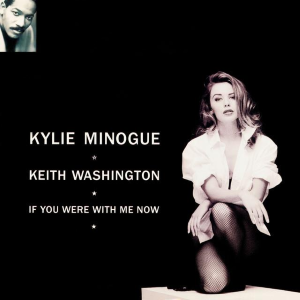
The melancholic majesty of Kylie's If You Were With Me Now
Ask the general public about Stock Aitken Waterman and they will tell you that they made catchy, happy three minute pop records. Which, in fairness, is palpably true.
But Mike, Matt and Pete were equally adept at balladry too. Witness the beautiful pain on display in Rick Astley’s Spanish-guitar-led It Would Take a Strong Strong Man, as Rick agonises over whether he should end his relationship. Likewise, Kylie tugs at the listener’s heart-strings as she puts a brave face on losing the love of her life in the desperately sad I’ll Still Be Loving You. And don’t get me started on the heartbreaking tale of two people who can’t be together in Donna Summer’s In Another Place and Time.
There’s more where they came from too. Lonnie Gordon’s Beyond Your Wildest Dreams, Sybil’s Make It Easy On Me and Jason Donovan’s I Guess She Never Loved Me are among the numerous ballads that the trio helmed.
What I especially like about most of the SAW ballads is that they are not slushy American-styled affairs; they are a very British take on the slow love song, whether that is down to a spikier production or a melancholic approach to the lyrics. Certainly, I’ll Still Be Loving You is actually mid-tempo, with possibly the saddest (in the truest sense of the word) synth sounds ever ramming home the emotional melody.
But we did finally get a slushy American-style ballad from the Hit Factory in 1991, when Mike Stock & Pete Waterman crafted If You Were With Me Now for Kylie Minogue and Keith Washington.
The track was recorded for Kylie’s fourth and final PWL studio album, Let’s Get To It. The album was among the first original Stock & Waterman material issued following Matt Aitken’s departure, and it could be taken very much as a statement of intent from Mike Stock. The album was a real departure in sound and songwriting for Stock, as much as it was an assertion of Kylie taking real control of her career.
The album showcased different genres, from New Jack Swing to acoustic guitar pop to techno, with possibly only the cover of Chairman of the Board’s Give Me A Little More Time the only track that sounded anything like a “typical” SAW production.
But one of the album’s crowning glories is If You Were With Me Now, a moving duet about two former lovers ruminating over their failed relationship and reaching the conclusion they’ve made a big mistake.
As the male voice, US singer Washington was not a well-known figure in the UK, but had established himself in the soul & R&B fraternity with releases such as 1991’s Kissing You. Minogue was a big fan of Washington, and as legend would have it, Pete Waterman approached Washington to duet with Minogue on this track.
The track is credited as a Stock / Waterman / Minogue / Washington co-write, although it is fair to suggest that the majority of input was Stock’s. Washington did travel to London to record his vocals at PWL, so perhaps he contributed additional lyrics at this point. He and Minogue, as is generally the case with modern day duets, did not record the track at the same time, with Minogue recording her vocals a few days later.
Lyrically, the song is a song of lost love, with a real melancholic edge to it. “Without you standing by my side,” opines Washington in the opening lines, “love and good fortune passes me by”. Quite a powerful line, and things don’t get much brighter from there on in.
The track hints at the male having cheated on the female; Washington sings “I know I may go astray…” whilst Minogue stresses that “If I’m sure of one thing / One love at a time”.
There’s plenty of wistful longing; “How different would the world be now?” offers Washington, whilst Minogue adds the plaintive “If only we had worked it out somehow”.
One possible reading of the song is that the closing lines hint at a possible reconciliation: “If loving you is right / then turn back the hands of time” begs Minogue, whilst Washington counters with “I'll do anything to make you mine”, and then both adding “There's nothing that i wouldn't do / I could make you feel my love for you” as the melody takes a hopeful turn.
Minogue sings her heart out here and has probably never sounded better, whilst Washington also impresses with a powerful yet smooth performance.
Stock provides a typically fine melody, big on emotion whilst holding back on sentimentality. The verses are measured and thoughtful, with the chorus (such as it is) restricted to three lines, with the title of the song as the final line.
The arrangement and production is gorgeous. Waterman arranged for the string section to be arranged by legendary Motown arranger Paul Riser in New York. This creates a rich, lush sound to this epic ballad, and Stock’s own instrumentation is in fitting, featuring a doleful piano and neat percussion.
Phil Harding was responsible for the immaculate mixes, and makes the song shine.
As I indicated before, I’m not really a fan of the American-style slushy ballad, but full marks to Stock & Waterman for their take on that sound. They take that late-night soul sound, and bring their own British melancholy to it.
If You Were With Me Now became the second single single taken from Let’s Get To It, released in October 1991 on 7”, 12”, cassingle and CD single. Apparently, one of the reasons it became a single is that DJ Pat Sharp (of SAW act Pat & Mick) loved the track and played it on his Capital Radio show – the response from listeners made it a contender for single release.
At the time, I was slightly disappointed; although I liked the track, I was hoping that a more radical track like Let’s Get To It, Right Here Right Now or Too Much Of A Good Thing would be issued – a track that would show a new modernity to the Hit Factory sound. But looking back, it was a good single choice, reaching #4 in the UK Singles Chart.
I’ll be honest; it’s only fairly recently that I have fully realised how great this track is. I’ve been listening to it a lot over the past few days, and aside from it being yet another example of S(A)W’s diversity, it’s such a sincere piece of music – although I accept it may be too sweet for some tastes. Maybe it’s an age thing, maybe it’s cos I’ve been through a tough few years relationship-wise, but I think it’s so powerful in its simplicity. If you ask me today, then I’d probably say it’s the best S(A)W track ever. I’ll probably give you a different answer tomorrow, but go with it for today and give it a play below.
References:
Mike Stock, "25 years ago today...", Facebook post, 21 October 2016
A look at the two ABBA-styled tracks Stock & Waterman fashioned for Bananarama in 1992...
As far as inspirations on the oeuvre of SAW goes, it's clear that there were various touchpoints which influenced Mike, Matt and Pete.
Certainly Mike Stock has cited Stevie Wonder and Billy Joel amongst others, whilst Matt Aitken has professed a love of Led Zeppelin. And there is surely a shared admiration of The Beatles amongst all three.
However, a line can be traced right back to the Swedish group ABBA. Whilst Stock and Aitken have not explicitly referred to ABBA as a direct influence, Waterman has repeatedly discussed his love of the band and there is something of the band's expertise in melody and arrangement in many SAW records.
And this has perhaps never been more overt than in the two ABBA-esque singles Mike Stock and Pete Waterman wrote and produced for Bananarama.
Bananarama and Stock Aitken Waterman had enjoyed a successful partnership between 1986 and 1989, starting off with the hi-NRG cover of Shocking Blue's 1970 hit Venus and culminating in the cover of The Beatles' 1964 hit Help! for Comic Relief. During this time, founding member Siobhan Fahey had departed the group and was replaced by Jacquie O'Sullivan, and the band returned to start work with SAW on new material. However, the band were disappointed with the initial results -- as well as apparently being concerned that the sound they had developed with SAW was being applied to many different artists (an accusation also levied at SAW by Dead Or Alive). As a result, Bananarama withdrew from working with SAW and commenced work on a new album instead with producer Youth (formerly of SAW-produced band Brilliant).
The resulting album Pop Life -- which actually did carry two SAW tracks (Ain't No Cure & Heartless) from the aborted 1989 sessions -- was a critical success in 1990, but after initial success thanks to two high-charting singles, the campaign petered out, with final single Tripping On Your Love peaking outside the Top 40. O'Sullivan departed the band shortly after for personal reasons.
Bananarama carried on as a duo -- Sara Dallin and Keren Woodward -- and in 1991, started planning their follow-up album. Their record label London Records urged them to work again with Mike Stock and Pete Waterman; the production trio, like Bananarama, had also slimmed down in the wake of Matt Aitken's departure in 1991.
When one considers the negative comments Bananarama had made about their reasons from moving away from SAW, their reunion with Stock & Waterman may have been a surprise -- but it wasn't a shock move. The music scene had changed dramatically by 1991/1992 and, looking back, it's difficult to see what direction Bananarama should have taken in a music scene dominated by techno and indie. Perhaps London Records were at a loss as where to take Bananarama, and decided to bring Stock & Waterman in as a safe pair of hands.
The resulting album -- Please Yourself -- apparently had a long gestation period, with the majority of tracks going through various mixes to please London Records. As a result, the album does not have a cohesive feel but instead tackles different genres; this is no bad thing as it is a strong album but it does not always sound like a Bananarama album. The overriding theme is 70s disco, with tracks like Give It All Up For Love, Is She Good To You? and Only Time Will Tell. You're Never Satisfied is perhaps the most typical S(A)W sounding track, whilst You'll Never Know What It Means draws on house and techno sounds to create a very contemporary sound. Closing ballad I Could Be Persuaded taps into US soul, with breathy vocals, male backing vocals as well as an elongated intro and coda, which shows off the excellent instrumentation and playing.
Waterman has since referred to the project as "Abba Banana", commenting that it was an attempt to tap into the Abba sound -- which of course was enjoying a revival thanks to the release of the success of Erasure's Abba-esque EP and the ABBA Gold compilation. However, this is not strictly accurate and I would argue that any nod towards ABBA is restricted to two tracks -- both released as singles: Movin' On and Last Thing On My Mind.
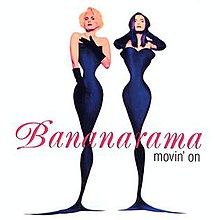
Movin' On was the first single from the album, and indeed relaunched Bananarama as a duo in 1992. The Benny and Bjorn influence is clear from the get go, with a terrific piano riff that tips its hat to Dancing Queen, leading to a verse, bridge and chorus melody that could have been written by the Swedes themselves. Interestingly though, the original mix (eventually released on the aforementioned re-issue) lacks the ABBA elements; it actually has its roots in a 70s disco sound in line with the overriding sound of the album. It would appear, from PWL archivist and expert Tom Parker's excellent sleevenotes for the 2013 Edsel re-issue of Please Yourself, that Last Thing On My Mind was the final track recorded for the album and was styled upon ABBA from the get go -- but one wonders if the ABBA influence was introduced to Movin' On following the success of Erasure's Abba-esque EP two months prior to the release of Movin' On.
A co-write between Stock, Waterman, Dallin and Woodward, Movin' On deals lyrically with the break-up of a relationship and the protagonist's attempt to put the pain behind them. However, you could argue that a parallel could be drawn with Bananarama (and indeed Stock & Waterman!) dealing with the loss of their respective former members, and making a statement that they would carry on stronger than before.
The verses are typically melancholic -- "And now the sun has finally set / And this is where the story ends / We didn't count upon a rainy day" -- whilst the chorus reveals new-found optimism -- "But I had no way of knowing / And I don't know where I'm going / But I'm movin' on". The strong lyrics contribute to the powerful flow of the melody; the track has a real organic feel to it, with little reliance on tricksy key and chord changes (though there is nothing wrong with such tricks!). It sounds like an effortless piece of work, though undoubtedly lots of hard work and talent went into its creation.
The girls sound in good voice on this track; there's a really successful match between their vocal delivery and the musical arrangement on this track. The upbeat backing supports their voices, and strengthens their impact. A note too for the backing vocals; most SAW Bananarama tracks had the girls themselves on backing vocals, but here, Stock & Waterman deploy the male backing vocalists they had introduced in 1991 for Kylie Minogue's Word Is Out. Whilst it detracts from an attempt to replicate the ABBA sound, it does adds to the contemporary sound at play here.
And that's a point worth making; whilst the ABBA influence is clear to see, Stock & Waterman have taken that and fused it with their own sound. In the same way that Jason Donovan's I'm Doing Fine evokes the sound of The Beatles whilst not actually sounding like The Beatles, Movin' On projects the ABBA sound with some of the band's key stylistic and melodic touches, whilst combining them with the S&W touches of a robust rhythm track, warm synth pads and prominent backing vocals.
However, whilst Stock & Waterman were indeed experimenting with different styles in 1992, the arrangement was still based around their signature sound enough for it to lack the modernity of the hit records of the time. Perhaps this was why Movin' On peaked at #24; a respectable position but perhaps a disappointing one for London Records. Given the "quality" of its contemporaneous rival singles, Movin' On'certainly was worthy of a higher position.
The single did receive fair promotion, although Dallin and Woodward were left exposed when the backing track tape jammed during a Radio 1 Roadshow performance to launch the single. Alan Jones wrote in Music Week that "Bananarama return with an impossibly commercial reminder of their former glories. Movin' On they ain't, but hitbound they most certainly are".
Released in August 1992, Movin' On was officially issued with a number of mixes; the 7" mix and the slightly extended Straight No Chaser mix (with a different coda than that of the 7" mix) both by Dave Ford, as well as harder, clubbier mixes -- the Bumpin' Mix courtesy of DJ CJ Mackintosh, and the Spag-A-Nana Dub by Tony Humphries. A further mix was issued on promo, the Bumpin' Mix, from PWL staffers Gordon Dennis and Peter Day.
It should be noted that there were numerous in-house mixes of the track which remained unreleased until the Please Yourself re-issue; the original 12" mix, the NRG Mix, the Movin' Mix, the NRG Mix and the Norty Banana Mix. Whilst one can understand why London Records -- and especially Bananarama's A&R man, DJ Pete Tong -- would want to get the track into the clubs, it is a shame that they opted to withhold the PWL mixes in favour of trendy mixes which did not treat the material sympathetically.
Of the PWL mixes, it's worth checking out the Bumpin' Mix and especially the Original 12" Mix, which has a raw disco appeal that is quite at odds with the polished Abba-esque single mix. There was also a Spanish version -- entitled Nueva Direccion -- which features Bananarama singing the song in Spanish over the backing of the 7" mix, although the absence of any backing vocals renders this version a little sparse. The definitive version must be the Straight No Chaser, with its lovely extended instrumental sections which feature a lovely descending pattern, although special mention must also be made of the terrific 70's style guitar solo.
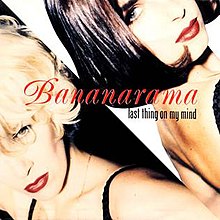
The next single, Last Thing On My Mind, followed in November 1992 -- and this took the Abba tribute to the next level. Tom Parker states that this track was the final track to be recorded for the album, and one wonders whether the Abba-fever sweeping the nation bore any influence on the direction of this track. As stated above, whereas Movin' On appears to have been adapted to sound like ABBA, Last Thing On My Mind definitely sounds like an ABBA tribute by design.
If anything, Last Thing On My Mind went deeper into ABBA territory, not just in melody but especially in production. Boasting a very intricate arrangement, the track features a plucked harp on its opening riff (a nod to I Have A Dream), arpeggio synth lines (reminiscent of Abba's 1981/1982 material) and some lovely guitar (channeling the work that ABBA session guitarist Janne Schafer did on the classic tracks). Building up the warm sound are strings, synth pads and real-sounding drum programming. Overall, it has the sound -- albeit modernised -- of a latter-day ABBA track, and could almost fit in somewhere between One Of Us and Under Attack.
Melodically, the dramatic verses give way to an almost sing-song bridge -- and then straight into a chorus worthy of Benny and Bjorn themselves. The phrasing is classic ABBA -- "And you're suddenly like a stranger / And you're leaving our love behind" -- but the following lines -- "Of all the things I was planning for / This was the last thing on my mind" -- nails it. You can imagine Agnetha and Anni-Frid singing that bit, no question.
However, the Bananarama version of Last Thing On My Mind gets a bit of a bad rep, with many people seeming to prefer the later (and more commercially successful) Steps version. If you check out a few pop music forums such as Popjustice, you will see numerous references to the track being "plodding" or "dull".
Now I LOVE the Bananarama version (and much prefer it to the Steps version)... but I do understand what people mean by such comments. I seem to recall that, at the time of release, I loved it but felt it could have benefited from a bit more "oomph" -- but I listen to it now and if anything, I appreciate the track more than ever... yet I cannot put my finger on why it has such a lukewarm reception from fans of S(A)W and Bananarama.
I mean, the instrumental is BEAUTIFUL. Seriously. It just sparkles. It was only released recently as part of the Bananarama In A Bunch CD singles box set, and I was amazed to hear so many parts & elements that were new to me -- even after 24 years of listening to it. The instrumental isn't available to listen to online in its entirety but you can hear a 2 minute extract at the Juno website.
So if there isn't a problem with the arrangement, what of the vocals? Now there are various views regarding Bananarama's vocal ability but they clearly can sing. For me, Bananarama sound better when their vocals are set against a dense, upbeat backing, as with I Heard A Rumour, I Can't Help It -- and even Movin' On. That juxtaposition works. However, in the case of Last Thing On My Mind, you have Bananarama set against a mid-tempo -- and intricate -- backing. And I'm not sure that this backing provides the boost that their vocals sometimes require. Perhaps it is this which results in any perceived "plodding"?
Certainly, many fans prefer the hi-NRG Mix which, as the title suggests, sets the girls against a backing of pounding synths and robust drum programming. Whilst this version is perhaps more typical of the S(A)W sound, it doesn't have the same allure of the main mix, with its lovingly, carefully crafted musicianship.
When it comes down to it though, I adore this track. The melody and arrangement are just gorgeous, and I do actually think that it's largely well performed by Bananarama, despite my comments above.
Alas, it appears that the record buying public of 1992 did not share my enthusiasm, as Last Thing On My Mind could only reach #71 in the UK singles chart. As with Movin' On, it did receive decent promotion; it was certainly playlisted on BBC Radio 1, and I remember DJ Steve Wright making positive comments about it on his afternoon show for that station. Unfortunately, his admiration was not shared by Smash Hits, where Mark Frith ended his one-star review of the song with the following statement: "Now that Mike & Pete make so few records, you'd think that the ones they did make would be really ace, wouldn't you? You'd be wrong".
Mark Frith doesn't hold back on what he thinks of "Banarama"!
The single release spawned the 7" mix and the hi-NRG mix (by Dave Ford) along with the FXTC Dub, the Tone Tone Mix and the Tone Instrumental -- the latter three by Tony Humphries, which again did little to enhance the appeal of the original mix. A mention too for the B-side, the brilliant '70s disco stomper Another Lover, which was quite frankly wasted as an additional track, and even worse, was omitted from the original version of the Please Yourself album.
As with Movin' On, there were further in-house PWL mixes that went unreleased until the Please Yourself re-issue, including an extended version (of the 7" mix) and an Xtra NRG mix. The extended version is definitely worth a listen, as is the aforementioned hi-NRG mix -- and especially the amazing instrumental version.
Clearly, the failure of Last Thing On My Mind to achieve a Top 40 chart placing was cause for concern for London Records, who opted to release a cover of Andrea True Connection's More More More (with additional lyrics by Stock & Waterman, and Bananarama). This track, remixed and buffed up from the album version, was more in line with the overall disco direction of the album, and did take Bananarama back into the Top 40, matching the #24 peak of Movin' On in March 1993. However, this contemporary update of a 70s disco classic ended the attempts at an ABBA-styled sound.
The Please Yourself album followed soon after in April 1993, and a fourth single -- the immediately catchy Is She Good For You? -- was earmarked for release in remixed (by Dave Ford) versions. However, the poor performance of the album led to the single release being aborted -- and ultimately to Bananarama parting ways with London Records, their label of 12 years.
Looking back on the exercise, the two ABBA-esque Bananarama tracks masterminded by Stock and Waterman point to a fascinating experiment that never reached full fruition. It seems that these tracks signified a late-in-the-day change in direction for a 70s disco-influenced album which was largely completed by that point -- and as the first two singles of the album campaign, were not fully representative of the Please Yourself album.
Whilst Please Yourself was perhaps less immediate than the power pop of the earlier SAW-produced album WOW!, it's a strong album with a pleasing take on disco and soul. But while You'll Never Knows What It Takes provided a tantalizing glimpse of a new Bananarama sound for 1993 (which frustratingly was never built upon), one does wonder what a full Bananarama album of S&W-helmed ABBA-infuenced tracks would have sounded like...
References:
Tom Parker -- Sleevenotes to the Edsel 2013 Deluxe Edition of Please Yourself
Alan Jones -- Market Preview, Music Week, August 1992
Mark Frith -- Singles Reviews, Smash Hits, November 1992
There are many varied opinions of the talents of Stock Aitken Waterman, but even their critics tend to grudgingly admit that they had an astonishing and enviable knack at coming up with amazingly catchy choruses.
A straw poll of their best choruses would no doubt include such contenders as Too Many Broken Hearts, Never Gonna Give You Up and Better The Devil You Know.
All great choruses, and I could roll off at least a hundred more examples.
But I want to put a proposition to you. A controversial proposition, and one which may seem strange.
I think Mike Stock's best chorus is hidden away on a wrestling album.
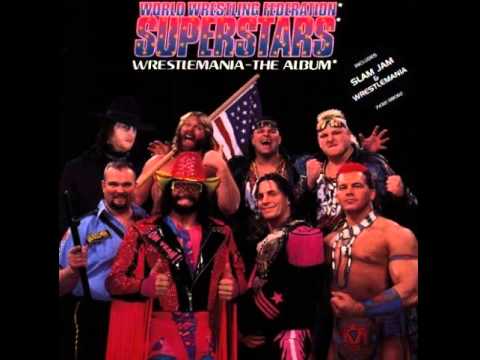
The chorus in question belongs to Never Been A Right Time To Say Goodbye, written and produced by Stock & Waterman, performed by Bret "Hitman" Hart and featured on the 1993 World Wrestling Federation's Wrestlemania - The Album.
That album followed the Stock & Waterman written & produced Slam Jam single, which reached #4 in December 1992. This funk-inspired, US-sounding track featured various WWF wrestlers shouting their personal manifestos in the verses, with the chorus sung by regular PWL backing vocalists, plus a rap in the middle-8 performed by former SAW collaborator Colin "Einstein" Case. A robust track, with a solid rhythm track and helpings of guitar, it was again another take on a new sound for Stock & Waterman, and one that seemed to catch on. A further Stock & Waterman written & produced track Wrestlemania followed in early 1993 -- very much in the same vein as Slam Jam, if perhaps more melodic -- which was followed by the album release.
Wrestlemania - The Album was very much an "all PWL hands on deck" project. Whilst Stock & Waterman were credited as Executive Producers, the bulk of the album was written and produced by other PWL personnel such as Dave Ford, Tony King & Gary Miller (though it is interesting to note that Stock & Waterman gained a writing credit on these tracks, even if Stock's influence was not immediately apparent). Whilst these tracks were expertly written and produced as you would expect, it is the Stock & Waterman produced tracks which stand out here: Slam Jam, Wrestlemania -- and Never Been A Right Time To Say Goodbye.
Never Been A Right Time To Say Goodbye is very much the outlier of the album. Whereas the other tracks are thumping, beat-heavy wrestling-themed cuts, Never Been A Right Time To Say Goodbye is a love song. Or rather, a song about the end of a relationship -- and the inclusion of such a love song on an album performed by wrestlers has to be insanity bordering on genius.
Interestingly, this song has a prior history. In 1992, Simon Cowell commissioned Stock & Waterman to write & produce tracks for David Hasselhoff (who Cowell had signed to Arista Records), and although that project was later aborted (apparently at Stock & Waterman's request), one of the tracks Stock, Waterman & Hasselhoff were working on was a version of Never Been A Right Time To Say Goodbye. It is unclear if Hasselhoff's version was ever completed, but either way, it can be assumed that Cowell liked the song and asked for it to be resurrected for the Wrestlemania album.
This song was assigned to Bret "Hitman" Hart as his solo track for the album. Hart, whose catchphrase was "The Best There Is, The Best There Was, The Best There Ever Will Be", was one of the leading lights of WWF at this time, and was almost certainly the star turn on the album.
Now it should be noted that most wrestlers are not noted for their singing abilities, and certainly none of the wrestlers featured on the album actually sang. Their contributions were restricted to spoken word, with any singing being capably handled by regular PWL backing singers Lance Ellington, Leroy Osborne, Miriam Stockley, Mae McKenna & Cleveland Watkiss.
What this of course means is that, although clearly a standard melodic pop song, Never Been A Right Time To Say Goodbye has Bret "Hitman" Hart speaking the verses, with the chorus performed by the male session singers. This makes for a slightly disconcerting listen at first -- but, you know, in a funny way, it kinda works.
Sure, Bret Hart's "Monster Mash" reading of the verses carries zero emotion -- he could be reading out a Nando's menu for all the effort he puts in -- but his stoic performance brings a worldly-wise take on failed love, and actually this one-tone delivery presents an interesting contrast to the over-the-top arrangement backing him.
That's not a criticism by the way, it's wonderfully over-the-top. Seriously, there's more drama in Stock's arrangement than in all of the Christmas episodes of BBC's EastEnders ever made and ever will be made.
Pounding along with terrifically punchy drum playing, the track has a pleasing amount of electric guitar (courtesy of Gary Miller), a lovely bass line and sweeping strings. Not to mention some fab 80s rock synth effects, and wonderful backing vocals.
Whilst it's not a rock track -- it's definitely and defiantly pop -- it has a rockier feel than many S(A)W tracks, and really benefits from an intricate production and arrangement.
If you listen closely, the lush synth pads hint at the verse melody and if you grab the lyrics from Mike Stock's site, you can approximate how the song could have sounded had it been sung throughout. And the thing is, it sounds like this would have been a GREAT track had it been performed conventionally.
But, for me, it all comes back to that chorus. It's a work of art. And, all things considered, I actually do think it is the best S(A)W chorus ever committed to tape.
Lyrically, the chorus is clever; concise but packs a punch. "Never been a way / Things you gotta say / Will break her heart / Make her cry" -- each line is delivered in a jab-jab rhythm, then the delivery opens up for the hook -- "There's never been a right time / To say goodbye, to say goodbye".
Even better, we're treated to a "double chorus". A classic SAW trick, the first time you hear the chorus, you get one iteration of the "main" chorus. The next and subsequent times, you get the main chorus, swiftly followed by a second iteration with amended lyrics. It's a really powerful trick, and at it's best, the swap over from the end of the first chorus to the second chorus is electrifying. Never Been A Right Time To Say Goodbye is no exception.
So the "second chorus" gives us a new take. "Never been a line / Never been a sign / That would let her down / Easier / There's never been a right time / To say goodbye, to say goodbye".
Straightforward these lyrics may be, but their brevity carries a lot of truth.
A lot of the success of the chorus has to be attributed to just how well it is performed here. Ellington, Osborne & Watkiss are superb vocalists, able to handle anything Stock threw at them, and their rich, powerful voices sell Stock's irresistible melody. No disrespect to Hasselhoff, who has a powerful voice, but I am not sure he would have carried the chorus off as well as it is here.
One thing which surprised me at the time was why Cowell allocated the track to the WWF album, rather than giving it to Worlds Apart, the Simon Cowell-backed boyband whose album (released around the same time as Wrestlemania - The Album) also featured two Stock & Waterman tracks. Surely this track would have been dynamite for a boyband, and in my opinion, could have been a significant hit for a band which never quite attained the heights which Cowell anticipated.
Nevertheless, the song survives in this half-spoken, half-sung hybrid version -- almost like a latter day MacArthur Park. So let's make the most of it, and listen to the full, released WWF/Bret "Hitman" Hart version. I would urge you to give it a try, and listen all the way through. Look past the WWF connection, look past the spoken verses and hear the song as it could have been.
But most of all, experience the full glory of that amazing chorus...
"I think from the point of view of what's personally given me greatest pleasure is one of the songs I did with Suzette Charles called "After You're Gone"... it has a very strange spiritual lyric, it's not so much a direct pop song as some of the others."
Mike Stock, interviewed by Paul Smith (Roadblock fanzine, 1994)
Mike, Matt and Pete have often been asked -- separately or together -- to choose their favourite song out of their own back catalogue. Whilst the common answer has been broadly "the songs the public loved the most" such as Never Gonna Give You Up and I Should be So Lucky, Mike Stock has also cited another, more obscure, track as one of his favourites.
The song in question is After You're Gone performed by US singer Suzette Charles, and one that most people are unlikely to have heard.
A former Miss America, Suzette Charles signed a record deal with RCA America and elected to record an initial six tracks with Stock & Waterman in 1993. One of these tracks -- soulful breakup song Free To Love Again -- did see a UK release via RCA UK and made it to #58, but it has been suggested that record industry politics resulted in the project being pulled.
As with pre-1987 SAW, the 1991-1993 Stock & Waterman period saw a great deal of experimentation in different styles, but the six Suzette Charles tracks were very much playing to their strengths as mainstream soul pop. The released single Free To Love Again was a lyrically clever track with a contemporary sound, whilst Just For A Minute was a dramatic slab of pop with a killer chorus. Don't Stop (All The Love You Can Give) was probably the most populist cut (and was earmarked as a possible second single given that Charles performed it on This Morning), whilst What The Eye Don't See was a classy piece of 90s Soul. Every Time We Touch was a slow, US-style ballad, effective if perhaps not in the recognised SAW style.
And then there's After You're Gone.
After You're Gone is a track which doesn't easily fit into categories like the other tracks do. Sure, at first listen, it's shiny and it's catchy, but underneath, it's a difficult track to pin down. Many SAW tracks present a dichotomy of upbeat arrangement and melancholy lyrics to the listener -- an interesting fact missed by many commentators -- but this track is more ambiguous.
If we take the lyrics of the chorus -- "And the spirit of you / is still here in my room / After you're gone / And your presence I feel / Undeniably real / After you're gone" -- yes, there is melancholy there, but also optimism.
An initial reading would perhaps suggest that Charles is singing about how she misses her partner when they are apart. However, I would argue that Stock's lyrics can be read in at least three different ways; yes, it could be a song about missing a partner, but it could be a song about a much-missed ex-partner, or even a partner who has passed away. I appreciate that the opening lines of the song -- "Every time we say goodbye / and you leave me" -- suggest a living partner, but Stock's suggestion of the lyrics having a spiritual quality could point towards a more supernatural visitation.
The recording itself helps with this ambiguity. What is clear from this track (and indeed the other 5 tracks) is that Charles has an amazing voice. Very smooth, very lyrical, but there's great power there -- and crucially, control. Some vocalists have powerful voices, but can sometimes sound like a foghorn belting a song out. It's obvious Charles has a strong voice, but the control she exercises is what makes it. And that benefits After You're Gone; the song demands emotion, but the ethereal, spiritual quality of the lyrics also requires temperance.
Likewise, Stock's arrangement manages to walk a fine line between upbeat pop and emotional ballad, supporting Charles' performance and aiding the sense of ambiguity. Opening with a sitar-esque sound, the track takes a mid-tempo pace with light percussion, guitar and undulating synth line, punctuated with backing harmonies and descending synth pads. The production gives the vocals room to breathe, which suits the lyrical and thematical qualities of the song, and the overall effect is to musically reflect the sense of mixed emotions presented by the lyrics.
A snippet of the track (the into and opening verses) was featured in an item about Charles on ITV's magazine show This Morning in 1993, but as the project faltered shortly afterwards, the track (along with four of the other five tracks Charles recorded with Stock & Waterman) did not see an official release. Although bootleg copies of those tracks did emerge in fan circles a few years later, it was not until Stock made the track available for streaming on his website that it garnered wider attention.
For me, this is my favourite Suzette Charles track and one of my favourite tracks of the Stock & Waterman period. I find most SAW fans (myself included) favour the more obscure tracks over the big hitters, and certainly After You're Gone is a fan favourite. Longtime SAW fan and expert Paul Smith has taken his love of this track even further, by having the chorus lyrics tattooed on his arm!
After You're Gone is a fine track, with a typically seductive Stock melody, neat production, ambiguous lyrics and a winning vocal. It deserves an official release, and one hopes that, given the ongoing re-issue of SAW product, one won't be too far off.
In an interesting postscript, Charles has recently been recording again with Stock, and writing about the song on his own website, Mike Stock states that he's "still very keen on this song and the nature of the lyrics, and I'm sure it will crop up again in some form or another in the future". So, whilst it's unclear if and when these recordings will be re-issued, it is not unreasonable - given Stock's love of the song - to suppose that one of those tracks could be a new recording of After You're Gone...
After Matt Aitken departed the Stock Aitken Waterman partnership in 1991, Mike Stock and Pete Waterman continued as production partners until late 1993. This two-year period saw less releases and a divergence of styles, culminating in what appeared to be some kind of resurgent chart success in 1993. One interesting avenue pursued by Stock & Waterman during this period was their take on two Art Rock classics; one of which was released at the time to a mixed reception, with the other emerging 23 years later to perhaps surprising praise.
Our first Art Rock cover comes courtesy of five-piece band Slamm. Slamm first emerged in 1992 with their cover of Love & Money's Candybar Express, released through their own Totally Norted Records label. This led to their signing to PWL Records in 1993, where they initially worked with Stock & Waterman. Slamm eventually ended up being marketed as a boy band, but they had a bit of an edge which separated them from the standard boy-band fare of the time, and they were also bona fide musicians. Slamm's debut PWL release was the Stock & Waterman-composed Energize, a high-octane dance track which combined pulsing synth riffs with rattling percussion, underpinned by what sounds like reverbed steel guitars. It's insanely catchy, both in verses and choruses, but peaked at #57.
However, it is Slamm's second single which is of interest here. Moving on from the "in your face" dance sound of Energize, Slamm toned down the galloping synths and brought in more guitar for their take on the Roxy Music classic, Virginia Plain. Widely considered as an innovative piece of avant garde pop, the original version of Virginia Plain was released in 1972 and was a pioneering record with its use of electronic sounds. It's also such an idiosyncratic track that many rock music fans would consider it uncoverable, so it was a brave move by Stock & Waterman and Slamm to cover it. That said, the Slamm version is generally quite a faithful updating; sure, it has a pounding 90s beat and it could probably do without the "rave crowd roar" sound effects during the intro, but the combination of synth pads and house piano for the main riff is quite effective plus it's full of quirky sound effects which tip their hat to the original. There's also a blistering guitar solo, and a very faithful take on the lengthy squelchy synth instrumental break (which was no doubt commercial suicide in 1993). Lead singer John Wilks' raspy vocals suit the song without being a blatant attempt at mimicking Bryan Ferry, and there's a great use of the stereo spectrum as a car zooms from the left ear through to the right as Wilks' sings "Last picture show down the drive-in / You're so sheer / You're so chic / Teenage rebel of the week".
I like this version, but then I am an unusual case, being a fan of both Roxy Music and Stock (Aitken) Waterman. I think if you're a SAW fan, you'll probably think it's a bit weird, and if you're a Roxy Music fan, you will no doubt consider it the devil's music! Certainly, a review of the single in Smash Hits amounted to two words: "Absolutely pathetic". Ouch. And let's not forget, this was the final release of the original S(A)W partnership. It peaked at #60 in the UK, but according to a later radio interview with Slamm, it did gain some airplay on US East Coast radio stations at the time.
Our second -- and final -- Art Rock cover comes from Bananarama, who of course had a successful career going back to 1981, and had moved into a renewed phase of their career in 1986 when they teamed up with Stock Aitken Waterman. After a number of big hits, Bananarama moved away from SAW in 1989 and worked with producer (and former member of SAW-produced act Brilliant) Youth for their 1991 album Pop Life. That album and its singles suffered mixed fortunes, and in 1992, Bananarama (by then a two-piece comprising Sara Dallin and Keren Woodward) were encouraged by London Records to reunite with the by-then Aitken-less Stock and Waterman for their Please Yourself album. That album yielded two Top 40 hits, as well as a number #71 placing for Last Thing On My Mind (later covered to greater success by Steps), but despite this, Bananarama would part ways with London Records in 1993. PWL expert Tom Parker's excellent sleeve notes for the recent reissue of Please Yourself indicates that the initial intention was for Bananarama to continue working with Stock & Waterman following their departure from London, but these plans were thwarted when Stock moved on.
At least one post-Please Yourself track was recorded in 1993, which was a cover of David Bowie's Changes. Due to the reasons cited above, this track was not released at the time, nor did it emerge on any of the recent (and very comprehensive) Edsel Bananarama re-issues. A short clip of the track was available on the Pete Waterman Entertainment website some years back, but for a long time, that was as much as fans could hear. Until January 2016, when the track leaked, ostensibly as a tribute to Bowie, who sadly passed in that same month. Released as a single in 1972, Changes is undoubtedly one of the key Bowie tracks, displaying the great man's talent with melody and lyrics, and it has earned a new resonance following his untimely passing.
Whilst the emergence of Bananarama's Changes was no doubt a very pleasant surprise for fans of Bananarama and SAW, what was even more surprising is that the cover was generally positively received. Sure, there were detractors, but there were also many voices of praise. It must be pointed out that Mike Stock stated on twitter that he wasn't sure he ever fully finished the track (and this was corroborated by producer Mike Rose, who worked with Stock at the time), but it sounds pretty good for what is essentially an unfinished recording.
Avoiding the harder dancier elements which featured in Slamm's Virginia Plain, Bananarama's take on Changes is a fairly faithful take on the original. Opening with some nice guitar work and swirling synth pads, the main riff kicks in with pleasingly chunky piano, giving way to Sara and Keren singing in a low-register, supported in the verses by piano and strings, with the odd appearance of the SAW-beloved Staccato Heaven preset! The chorus is delivered with aplomb, with synth brass and glorious sampled-stuttering of "Ch-Ch-Ch-Ch-Changes!". Perhaps the middle-eight could have benefited from a beefier sound, but as stated, the track was not finished, and anyway, the gorgeous swelling build up to the final choruses more than makes up for it. Overall, it's a very pleasant listen, and very much in the typical spirit of the Bananarama sound. And for a fan like me, it's always a delight to hear an unreleased S(A)W track after all these years. Hopefully, an official release will be forthcoming.
My overriding view on both of these tracks is that they will no doubt divide opinion. The original versions of both Virginia Plain and Changes are rightly considered genuine classic pop/rock songs, and to be honest, any act covering these songs are on a hiding to nothing as they are both considered sacrosanct. That said, I do think that these Stock & Waterman produced covers are faithful to the originals, albeit redressed in the sounds of the early 1990s, and prove to be an interesting take on these Art Rock classics.




:format(jpeg):mode_rgb()/discogs-images/R-692228-1191767981.jpeg.jpg)
